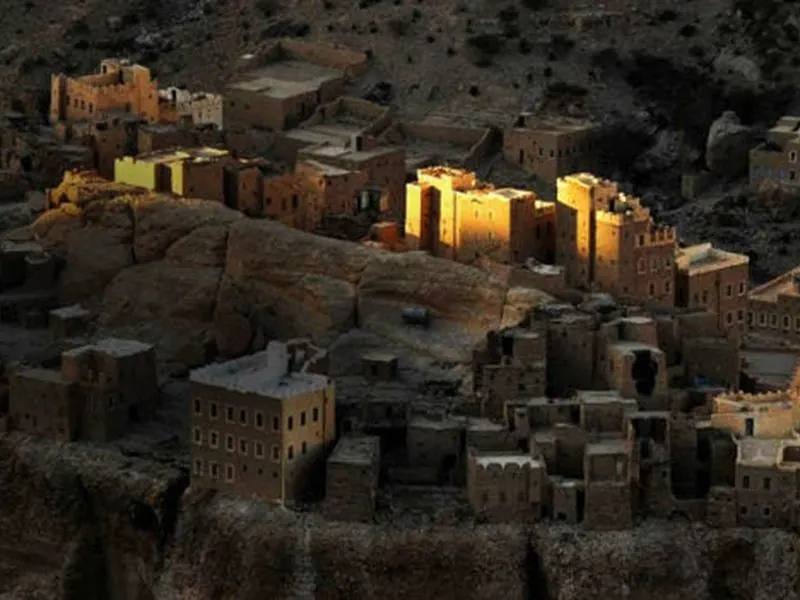
Desert valley
Hadramout
A narrow valley cut deep into a plateau, with mudbrick towns built onto the cliffs. The Sidr trees grow unirrigated on the slopes and valley floor.
Yemen Sidr
Hadramout · Usimate · Shabwah
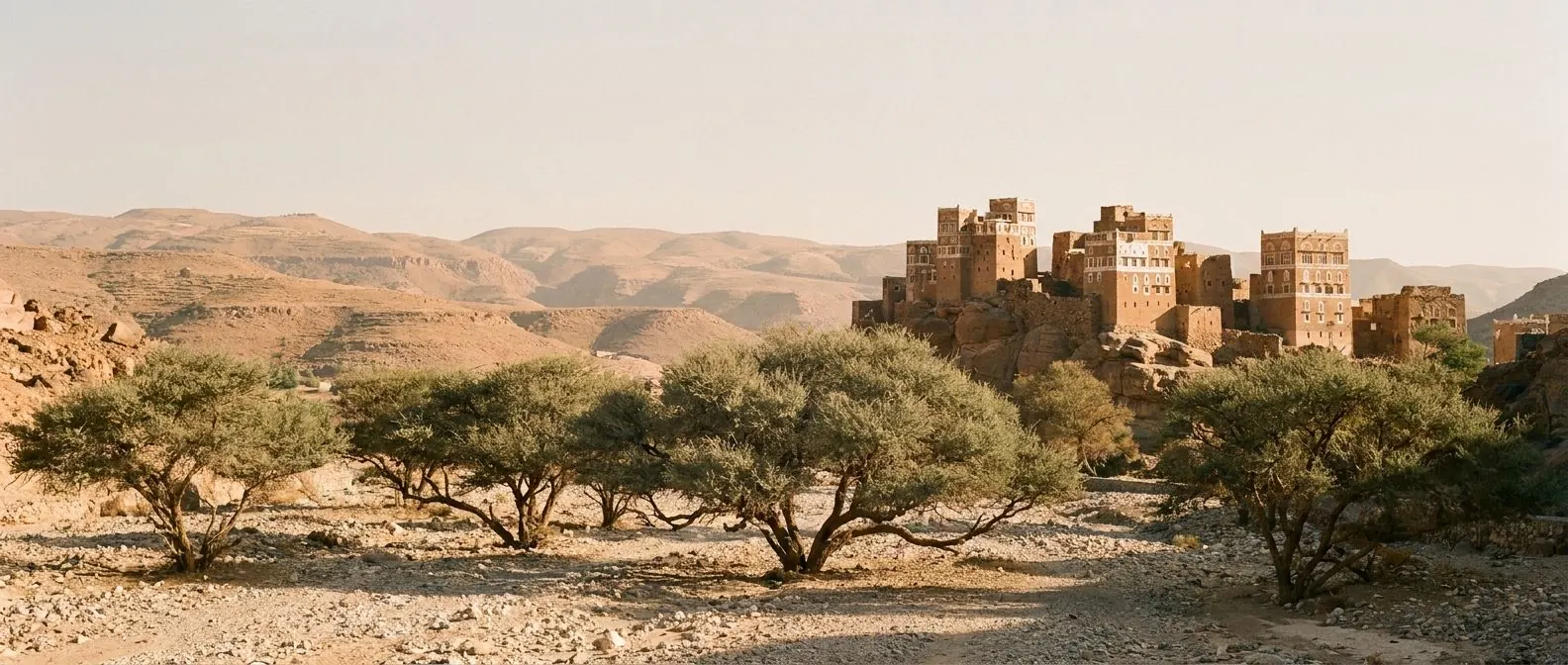
Illustration — the three terrains our honey comes from, not a photograph of a single place.
Our honey comes from three distinct parts of Yemen, and they are not interchangeable. Hadramout is a dry desert valley. Usimate is high, cool mountain country. Shabwah is an arid plateau west of them both. Same tree, three climates, three honeys.
Desert valley
A narrow valley cut deep into a plateau, with mudbrick towns built onto the cliffs. The Sidr trees grow unirrigated on the slopes and valley floor.
Yemen Sidr
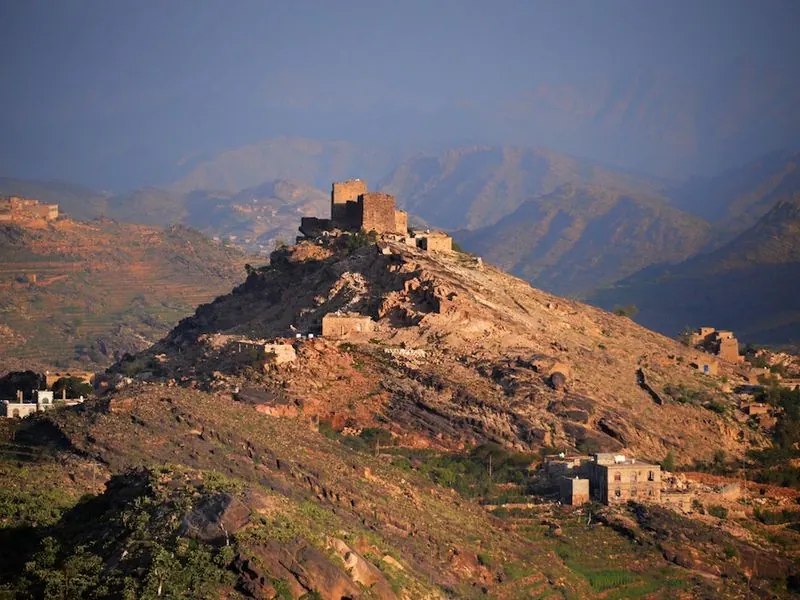
Green highlands
Mountain country, terraced and green for much of the year. The altitude and the rainfall give the harvest a different character from the desert valleys.
Photograph: Yemeni highlands (Haraz). Representative of the terrain, not of Usimate itself.
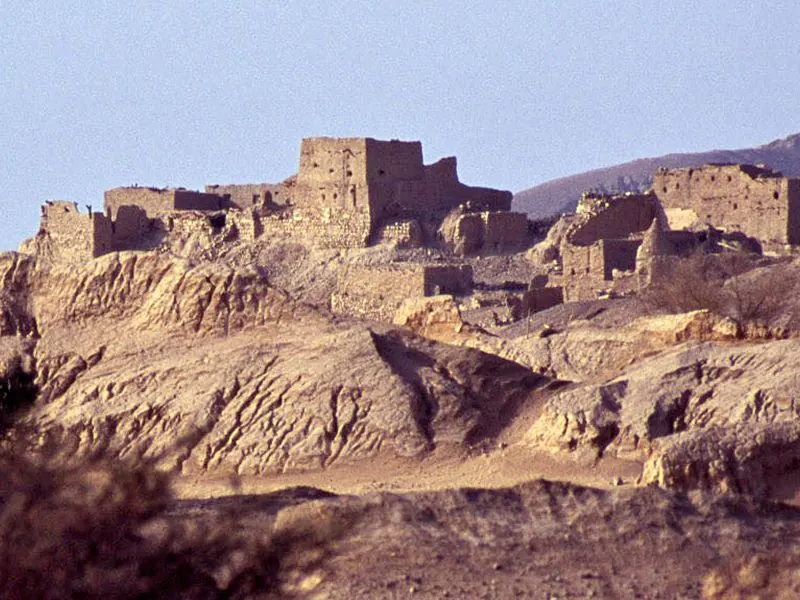
Arid plateau
West of Hadramout, drier and more open. Once the capital of the Hadhramaut kingdom and a staging post on the incense route.
Photograph: Shabwa, Yemen (Wikimedia Commons)
None of these three places is good agricultural land. Hadramout is a dry valley cut into a plateau, Usimate is thin highland soil, Shabwah is arid and open. Sidr survives in all of them because it needs very little, and takes only the rain that arrives.
That is the whole mechanism. A tree under water stress produces less nectar, and what it does produce is markedly more concentrated than the same species grown under irrigation. The harvest is small for the same reason the honey is dense — you cannot have one without the other.
Fourteen beekeeping families harvested the honey in this season's jars. Knowing where the bloom will fall is expertise held in families rather than written down anywhere.
The country
Sheer-sided valleys cut into a limestone plateau, mudbrick towns built onto the cliffs, and Sidr trees taking whatever rain arrives. Nothing here is irrigated and nothing is planted to order.
The harvest
Beekeepers move with the flowering, not against it. The window is a few weeks, the work is done by hand at first light, and the yield is small — which is the whole reason this honey costs what it does.
Why it matters here
Sidr honey is not a commodity in Yemen. It is what a family sends when someone is unwell, what is kept back for a wedding, and what a household will spend real money on when there is little to spare. This is the shortest version of why.