
Yemen sits at the bottom corner of the Arabian Peninsula, and for most of recorded history it was one of the wealthiest places in the ancient world. The same trade routes that carried frankincense and myrrh out of Hadramout carried honey.
A landscape that suits the tree
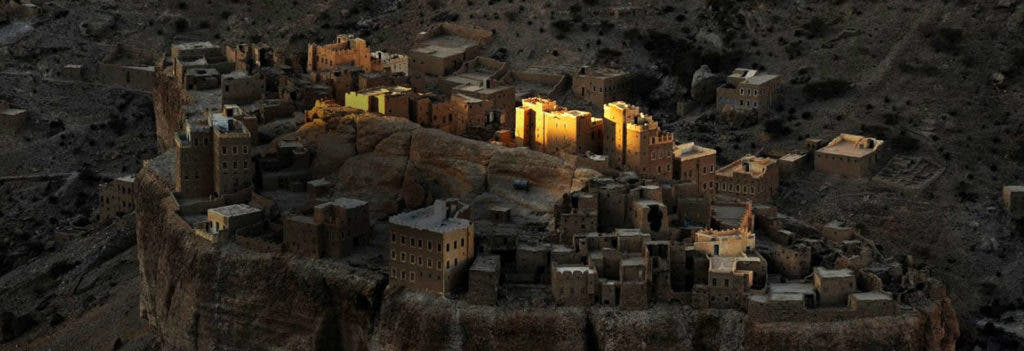
Wadi Do'an is a narrow valley cut deep into a plateau, with sheer walls and mudbrick towns built onto the rock. The Sidr trees grow on the slopes and the valley floor, unirrigated, spaced by whatever water there is.
It is not good agricultural land in any conventional sense. That is precisely why the trees that survive there produce what they do.
Beekeeping that moves
Because the trees are wild and the bloom is brief, Yemeni beekeeping is nomadic. Hives are loaded onto trucks and moved to wherever the Sidr is flowering that season. Families have followed the same routes for generations, and knowing where the bloom will be is expertise that does not exist in written form.
The tree decides where the hives go. Not the other way round.
Why it stayed small
Yemeni honey never industrialised. Partly the terrain does not allow it, partly decades of conflict have made investment impossible, and partly there was never a need — the honey has always sold within the region at prices that sustained the families producing it.
The consequence is a supply chain that is still small enough to trace. That is unusual in food, and it is the thing we think is most worth protecting about it.
Common questions
Where does the best Yemeni honey come from?
Hadramout, and particularly the Wadi Do'an valley, is the region most associated with high-quality Sidr honey. Shabwah is the other name to know.
Why is Yemeni honey so expensive?
Wild trees, a bloom lasting a few weeks, nomadic beekeeping over long distances, and small yields per hive. None of it scales.