The tree is the same species everywhere: Ziziphus spina-christi — also sold as lote or jujube honey. Sidr honey from Yemen, Saudi Arabia, Pakistan and India all comes from it. The label is the same; the honey is not. The differences come from the trees themselves, from water, and from how the harvest is run.
No two seed-grown trees are alike
Sidr is a heterozygous outbreeder: it reproduces by seed, and every tree grown from seed is genetically distinct from its parents and its neighbours. There is no standardised Sidr variety the way there are standardised apple varieties — the botanical literature on propagating the species had to develop laboratory cloning precisely because seed-grown trees vary so much.
Irrigation is the biggest single difference
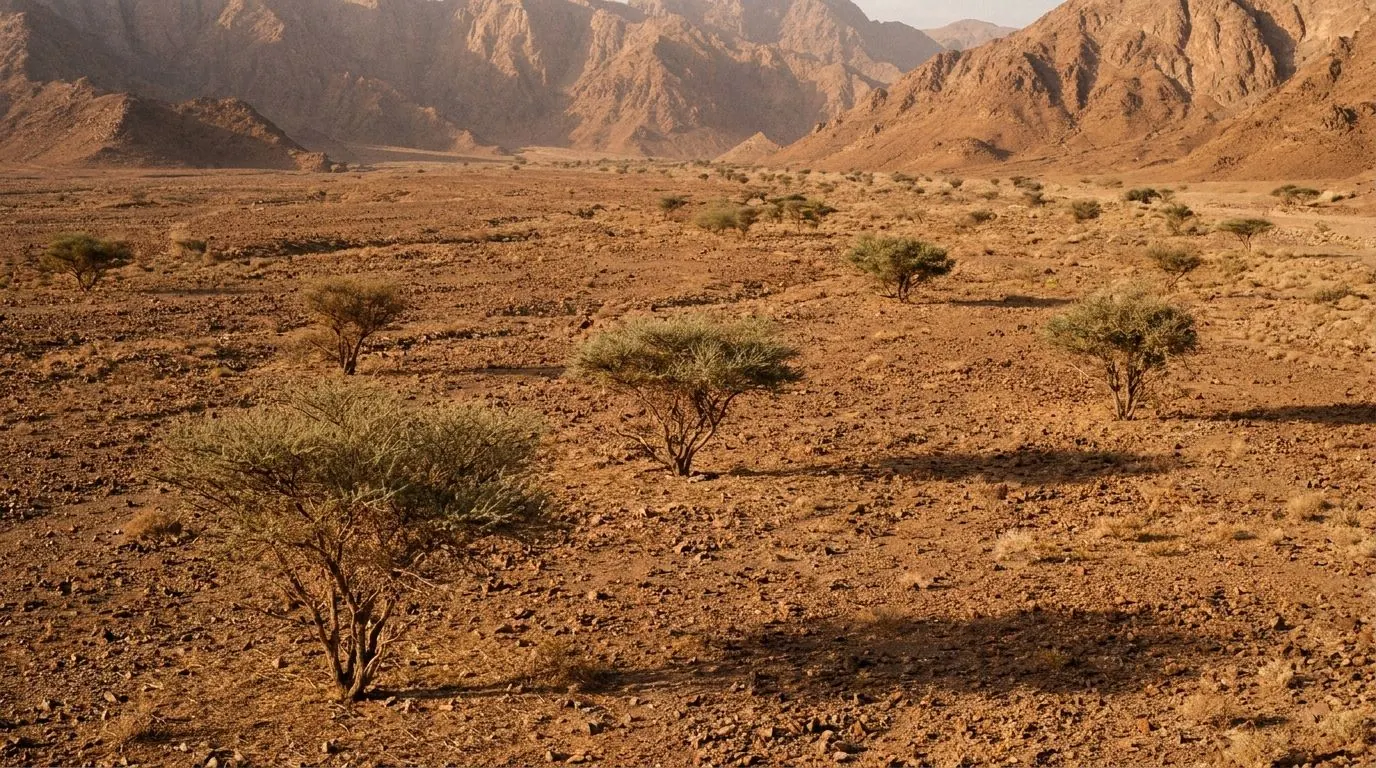
Sidr is often planted and irrigated elsewhere, because a watered tree grows faster and yields more. Across most of Yemen it is not irrigated; the trees take what rain arrives and no more.
A tree under water stress produces less nectar and concentrates what it does produce. The result is a denser honey with a lower moisture content and a longer finish — and considerably less of it per tree.
The hives move to the trees
Where Sidr is farmed, hives are typically placed among planted trees at a known time. In Yemen the bloom shifts with the rain, so beekeepers load hives onto trucks and follow it, sometimes hundreds of kilometres. Knowing where the bloom will fall is expertise held in families rather than written down.
Yemen is not one place either
This is the part most comparisons miss. Yemeni Sidr is not a single flavour. Honey from the desert valleys of Hadramout is dense and caramel-forward; from the cooler highlands around Usimate it is lighter and more floral; from the arid plateau of Shabwah it is darker and more resinous.
Where other origins have the advantage
Consistency and price. An irrigated, managed Sidr harvest produces a more uniform product year to year and a much cheaper one. If you want the same jar every time, that is a real argument, and it is honest to say so.
What it cannot offer is the density that comes from stressed trees, or a supply chain small enough to name a valley.
How they differ in the jar
- Yemeni Sidr is typically denser, with lower moisture and a longer finish.
- Irrigated Sidr from other regions tends to be lighter, sweeter and thinner.
- Yemeni Sidr carries more caramel and malt; the difference is noticeable side by side.
None of this makes Sidr honey from elsewhere bad. It makes it a different product sold under the same name, usually at a lower price — which is entirely fair, as long as everyone is clear which one they are buying.
Common questions
Is all Sidr honey from Yemen?
No. Sidr trees grow across the Arabian Peninsula, in Pakistan, and elsewhere, and honey from all of them is sold as Sidr (sometimes as lote or jujube honey). Yemeni Sidr specifically comes from valleys like Wadi Do'an and the Shabwah plateau, where the trees are largely uncultivated.
Is Yemeni Sidr honey better than Saudi or Pakistani Sidr?
It is different rather than automatically better. Yemeni Sidr is usually denser because the trees are unirrigated, while irrigated harvests elsewhere are more consistent and cheaper. The species of tree is the same in all cases.
How can I tell if Sidr honey is really from Yemen?
There is no certification scheme that proves it. The best available check is supply-chain specificity: ask which region and which harvest season, and expect a seller to answer both without hesitation.
Does all Yemeni Sidr honey taste the same?
No. Hadramout produces a dense, caramel-forward honey, the highlands around Usimate a lighter and more floral one, and the Shabwah plateau a darker, more resinous one — all from the same species of tree.