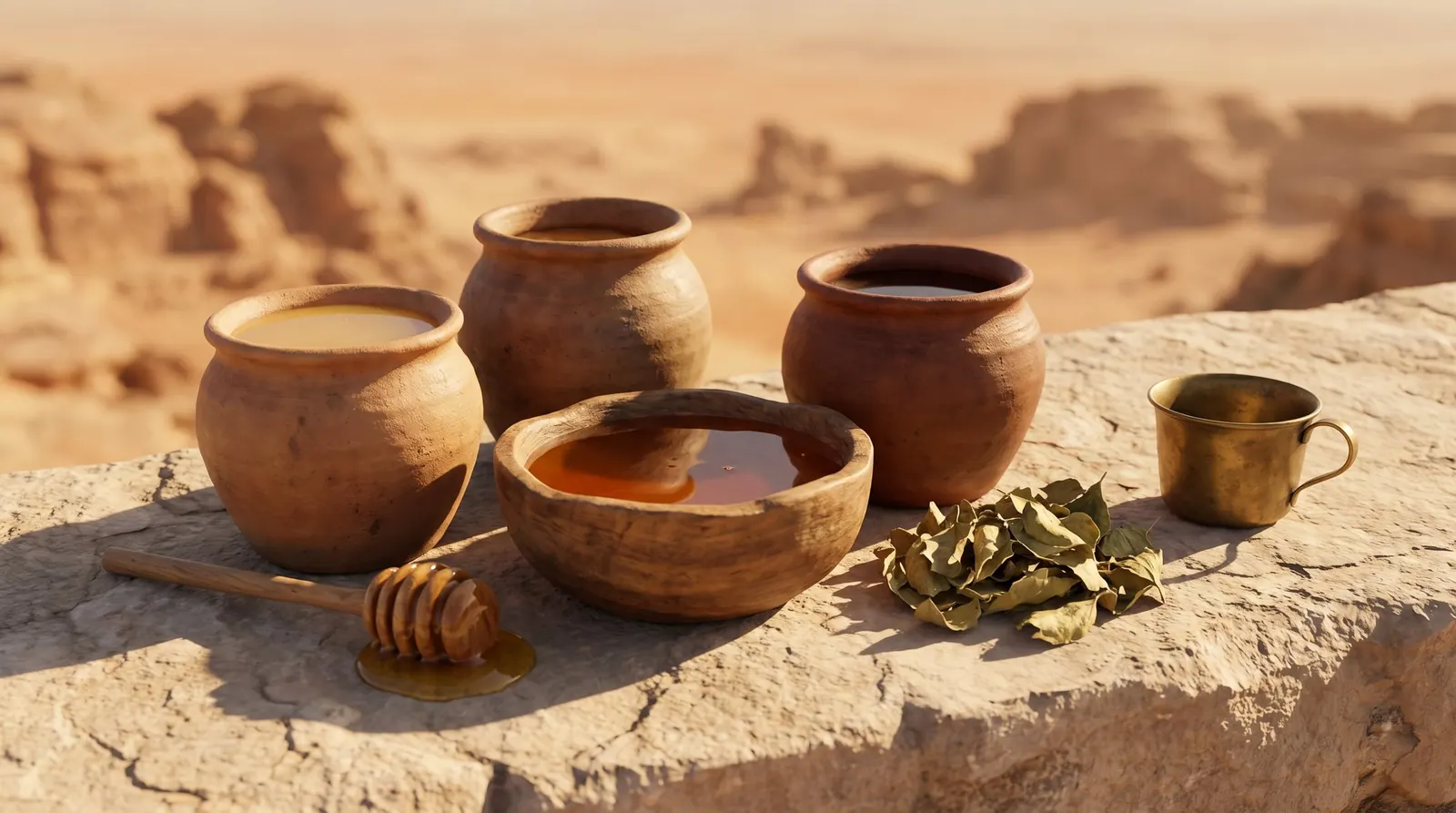
There is no single best Sidr honey for every buyer, because the right jar depends entirely on whether you value desert scarcity, strict government food testing, or an affordable daily spoonful. If you want the thickest texture, the deepest caramel-and-resin notes, and centuries of traditional harvest methods, Yemeni Sidr from Hadramout or Shabwah is the benchmark, though it is also the most expensive. If you prefer rigorous state-enforced laboratory controls and local hygiene standards, Saudi Arabian Sidr is a better choice. And if you want a genuine single-origin Ziziphus honey to drizzle over breakfast every morning without paying luxury markups, Pakistani or Kashmiri Sidr will serve you far better.
Why Sidr honey varies so much from one place to another
Sidr honey is made by bees foraging on the small yellow blossoms of the Ziziphus genus, primarily the Ziziphus spina-christi tree, known in Arabic as Sidr or locally in Yemen as 'ilb. In the Qur'an, this tree is named as Sidrat al-Muntaha, the Lote Tree of the Utmost Boundary (53:14, Sahih International), an identification documented by Dafni et al. in the Journal of Ethnobiology and Ethnomedicine in 2005. Because the tree grows across a vast arid belt stretching from the Arabian Peninsula into South Asia and North Africa, Sidr honey is not the monopoly of one country.
What changes from one region to the next is water, altitude, the subspecies of honeybee, and how the beekeeper works. According to a 2023 brief by the Sana'a Center for Strategic Studies (citing Khanbash, 2006), the Sidr tree in Yemen grows from the coast up to 2,500 metres, survives on just 50 to 300 millimetres of rain a year, and can live for hundreds of years. When a tree receives almost no rain, the nectar in its blossoms is highly concentrated. When the same genus grows in cooler, wetter foothills in South Asia, the nectar holds more water, and the resulting honey is naturally looser and milder.
Think of it like Arabica coffee or extra-virgin olive oil. A coffee bean grown on a dry Yemeni mountain terrace tastes completely different from the same botanical variety grown on an irrigated farm elsewhere. Neither is fake; they are simply built for different moments at the table. For published compositional studies on how Yemeni honeys compare in the laboratory, you can visit /research.
Comparing the Sidr honeys you can actually buy
Most shoppers looking for the best Sidr honey will encounter jars from three main regions: Yemen (split across its desert valleys, dry plateaus, and northern highlands), Saudi Arabia, and the mountain belt of Pakistan and Kashmir. Each has distinct strengths and clear trade-offs.
| Origin | How it is usually harvested | Taste and texture | How to verify it | Who it suits best |
|---|---|---|---|---|
| Yemeni: Hadramout (Wadi Do'an) | Nomadic beekeepers using traditional clay pipe, log, or wooden box hives; cut by hand from the back of the hive in autumn. | Thick and slow-pouring; caramel and malt flavour with a long finish. | Valley and harvest traceability, pollen analysis, and seller supply-chain transparency. | First-time buyers of premium Sidr and purists who want the classic desert harvest at the most expensive end of the market. |
| Yemeni: Shabwah | Hand-harvested in autumn from hives moved onto the high, dry plateau west of Hadramout. | Dense like Hadrami, darker in colour, deep and resinous with a faintly bitter finish. | Traceability to Shabwah beekeepers and seasonal harvest records. | Experienced Sidr buyers and collectors who prefer a darker, less sweet, more complex profile. |
| Yemeni: Usimate (Highlands) | Foraged in cooler, greener mountain country; often cut and packed as whole comb inside liquid honey. | Lighter and looser than the desert harvests; floral, gentle, and waxy when sold with comb. | Traceability to highland families; visual inspection of natural, uncapped or hand-cut comb. | Gift buyers and households that want Yemeni provenance with a milder, floral taste. |
| Saudi Arabian | Produced in domestic apiaries operating under strict national agricultural and hygiene monitoring. | Extra light to dark amber; robust flavour with moisture regulated below 20%. | Saudi Food and Drug Authority (SFDA) Standard 147 compliance and residue testing. | Buyers in the Gulf or abroad who value state-backed food safety checks above traditional hive lore. |
| Pakistani and Kashmiri | Harvested from Ziziphus species in temperate or foothill climates with higher rainfall. | Slightly thinner texture due to higher natural moisture; milder than desert harvests. | Basic laboratory sugar-syrup screening and moisture checks. | Everyday kitchen users who want genuine Ziziphus honey for cooking and tea at the most accessible price. |
Yemeni Sidr: Hadramout, Shabwah, and Usimate
In Yemen, Sidr honey is never just called Sidr; it is named after the valley or district where the bees were parked when the trees flowered. A 2023 report by the Sana'a Center for Strategic Studies notes that Yemenis distinguish primarily between Do'ani (from Wadi Do'an in Hadramout), Jardani (from Jardan in Shabwah), 'Usaymi (from Osaymat in Amran), and Wessabi (from Wessab in Dhamar). In his 2021 book Beekeeping in Hadhramout, published by Hadhramout University, researcher M. S. Khanbash writes that Sidr flowers in Hadramout for about 40 days in October and November, and that this autumn harvest is prized above the smaller spring bloom. Khanbash also reports that Sidr honey sells for eight to ten times the price of other local honeys, describing it as light amber with very high viscosity.
That thickness is partly down to the local bee. Yemen is home to Apis mellifera jemenitica, which a 2024 review by Y. Alattal in the European Journal of Entomology identifies as the smallest western honeybee, with a body about 20% smaller than the European Carniolan bee. Alattal notes that it is the only subspecies capable of surviving long Arabian summers where daily temperatures exceed 45°C. In a 2012 laboratory study by Abou-Shaara, Al-Ghamdi, and Mohamed in Environmental and Experimental Biology, Yemeni worker bees tolerated extreme heat significantly better than European bees. In Hadhramout field trials recorded by Khanbash (2021), local jemenitica colonies produced an average of 7.2 kilograms of honey while imported European colonies managed only 1.4 kilograms.
The way the honey is taken from the hive also shapes the jar. As Eric Hansen documented in Saudi Aramco World in 1995, and as Khanbash (2021) details, traditional Yemeni beekeepers use fired clay pipes, hollowed logs, or long wooden boxes stacked under palm-frond shade. Beekeepers calm the bees with smouldering burlap, open the rear of the hive, and cut the white honeycombs out by hand with a knife, stopping before they reach the brood at the front. Liquid honey is simply strained through cloth with no heat applied.
- Hadrami (Wadi Do'an): Added to UNESCO's Tentative List in 2025 as a valley known for producing some of the finest honey in Yemen. Our Hadrami harvest from 14 beekeeping families is thick, slow-pouring, and carries a distinct caramel-and-malt flavour with a long finish. It is the best starting point if you have never tasted Yemeni Sidr.
- Shabwani (Shabwah): Harvested from the drier, higher plateau west of Hadramout by 9 families in our network. It is just as dense as Hadrami but darker, with a resinous depth and a faintly bitter finish. It is divisive: first-timers can find it intense, while longtime Sidr eaters often prefer it.
- Usimi (Usimate highlands): From cooler, greener mountain country, harvested by 11 families. Because the climate is wetter, the honey is noticeably lighter in colour and floral in taste. We pack our Usimi jars with a piece of edible honeycomb inside, making it the best choice for a traditional gift.
Saudi Arabian Sidr: when strict regulation matters most
Across the northern border, Saudi Arabia shares both the Ziziphus spina-christi tree and the heat-tolerant Apis mellifera jemenitica bee. Honey is central to Saudi table culture; according to the Saudi Food and Drug Authority (SFDA), Saudi Arabians consume an average of 320 grams of honey per person every year, which is double the global average.
Where Saudi Sidr stands apart is state oversight. Under SFDA Standard 147, the authority strictly regulates both domestic honey production and imports, testing parameters such as enzyme content, colour, density, taste, and flavour. The SFDA also prohibits chemical treatments during honey processing. Even Yemeni honey entering the Kingdom is vetted: a 2025 SFDA registry lists approved Yemeni honey exporters and classifies their permitted imports into Sidr, Samra, and Mara'i (multifloral pasture honey).
If you feel uncomfortable buying from informal supply chains, or if your priority is a government-enforced food safety stamp on every batch, Saudi Arabian Sidr is arguably the best Sidr honey for you.
Pakistani and Kashmiri Sidr: the honest choice for daily use
While Sidr honey from Pakistan and the wider Kashmir region comes from the same botanical family, the geography could hardly be more different from southern Yemen. Because the environment is less arid than Yemen's desert valleys, the nectar starts with more water, giving Pakistani and Kashmiri Sidr a slightly looser, faster-pouring texture than desert Hadrami honey.
We do not sell Pakistani or Kashmiri Sidr, and we think it is important to be fair about where it wins. If you want to stir two tablespoons of honey into a pot of tea every day, bake bint al-sahn (the Yemeni layered pastry served with butter and honey, documented by Caton and Hestler & Spilling), or pour honey generously over pancakes, using Wadi Do'an Sidr is an expensive luxury. For everyday culinary volume, a verified, raw Pakistani or Kashmiri Sidr is the sensible buy.
When you should not buy Sidr honey at all
Even within Yemen, Sidr is not the only prized harvest, and depending on your palate, it may not even be the honey you enjoy most. Sidr is quite low in sharp acidity; its profile is rich, rounded, and heavy, much like soft Medjool dates or dark malt.
If you find heavy caramel notes cloying, you may prefer Yemen's acacia honeys. As Khanbash (2021) and a 2021 Al Jazeera report document, Yemen's second most valued harvest is Samr (or Somor), made from the blossoms of Acacia tortilis between February and May; it is a darker amber honey with a sharper, less sugary profile. Along the Red Sea coast of Tihama, bees forage on Acacia ehrenbergiana to make Salam honey, which a 2009 report in The National described as dark, thin, and distinctly smoky. And if you simply want a light, easy-pouring table honey for the family kitchen, Mara'i—produced nearly year-round from mixed desert and mountain pastures, as noted by Holm Akhdar in 2021—costs far less than Sidr and asks for no special occasion.
How to verify what is actually in the jar
Because Do'an Sidr honey is described by Eric Hansen in Saudi Aramco World (1995) as the most expensive and sought-after honey in the world, the temptation for sellers to cut it with cheaper multifloral honey or sugar syrup is high. Viral kitchen tricks—like dropping honey into cold water, setting a match to it, or rubbing it between your fingers—only test how much moisture is in the honey, not which flower the bee visited.
When we choose between our own three Yemeni harvests, we match the jar to the person. We suggest Hadrami from Wadi Do'an for anyone buying Sidr for the first time who wants to understand why the desert valley is famous. We suggest Usimi with the honeycomb still in the jar when the honey is meant as a gift, echoing the Wadi Do'an tradition described by Hansen (1995) of reserving fine honey for guests and wedding families. And we keep Shabwani for returning buyers who want the darkest, most resinous spoonful we bring out of Yemen.
Common questions
Which region in Yemen makes the best Sidr honey?
Wadi Do'an in Hadramout is the most famous and was placed on UNESCO's Tentative List in 2025 partly for its honey tradition, making it the classic choice for a thick, caramel-forward spoonful. However, many experienced buyers prefer Shabwah for its darker, resinous, slightly bitter finish, while Usimate in the highlands produces a lighter, more floral honey.
Is Kashmiri or Pakistani Sidr honey real Sidr?
Yes, provided it is pure and unadulterated, it is genuine Sidr honey harvested from Ziziphus trees in South Asia. Because those regions are less arid than Yemen's desert valleys, the honey is naturally thinner, milder in flavour, and significantly less expensive.
Why is autumn Yemeni Sidr honey valued above spring Sidr?
According to Hadhramout University researcher M. S. Khanbash (2021), the Sidr tree can flower twice a year after rain, but the main 40-day bloom in October and November yields the most concentrated, monofloral nectar. Beekeepers from across Yemen move their hives into valleys like Wadi Do'an specifically for this autumn window.
Should I buy Sidr honey with honeycomb or pure liquid honey?
Choose a jar with honeycomb, such as our highland Usimi harvest, if you are buying a gift or enjoy chewing the mild, sweet wax as the honey releases. Choose strained liquid honey, such as Hadrami or Shabwani, if you want a dense, slow-pouring honey to eat cleanly off a spoon or drizzle over warm bread.
How does Saudi Sidr honey compare to Yemeni Sidr?
Both come from the Ziziphus spina-christi tree and are often made by the same small, heat-tolerant Arabian honeybee. Yemeni Sidr is prized for its remote, uncultivated valley flora and traditional clay or wooden box beekeeping, whereas Saudi Sidr excels in strict government food safety oversight under SFDA Standard 147.
Sources
- Best Sidr Honey in the World? Why Yemeni Sidr Leads – Aurum Apis
- sfda.gov.sa
- Khanbash M. S., Beekeeping in Hadhramout, Hadhramout University, 2021
- Sana'a Center for Strategic Studies, An Ancient Tradition at Risk: Yemen's Beekeeping and Honey Production in Times of War, 2023
- Hansen E., The Beekeepers of Wadi Du'an, Saudi Aramco World, 1995
- UNESCO World Heritage Centre, Haid Al-Jazil and Wadi Daw'an, Hadramout Tentative List Entry, 2025
- Alattal Y., Adaptation of Apis mellifera jemenitica to high temperatures, European Journal of Entomology, 2024
- Abou-Shaara H. F., Al-Ghamdi A. A., Mohamed A. A., Environmental and Experimental Biology, 2012
- Saudi Food and Drug Authority, Approved Yemeni Honey Exporters List, 2025
- Al Jazeera, Yemen's honey industry report, 2021
- Holm Akhdar, Yemeni honey types overview, 2021
- The National, Sana'a's sweet surprises, 2009
Not ready yet?
$10 off your first order, whenever you are ready
The harvest letter: new harvests, stories from Yemen, and a private code for your first jar.