There is no 'royal' grade of honey — in Yemen or anywhere else. On a jar of Yemeni honey the word is a name, not a measurement. It is on our own label too, as part of the brand, and it tells you nothing about what is inside; the valley and the harvest season do.
The word matters for a different reason. 'Royal honey' is also the name of a product category that has nothing to do with Yemeni beekeeping — and it is one the US Food and Drug Administration has warned about many times.
Three things 'royal' can mean
- A brand or marketing word. Common on Gulf and Yemeni honey, ours included. It is not a grade, and no authority awards it — judge the jar by the region and season printed under it.
- Honey blended with royal jelly. Royal jelly is a secretion worker bees feed to larvae and queens. It is a real product, but a blend should list it as an ingredient, and it is no longer pure honey.
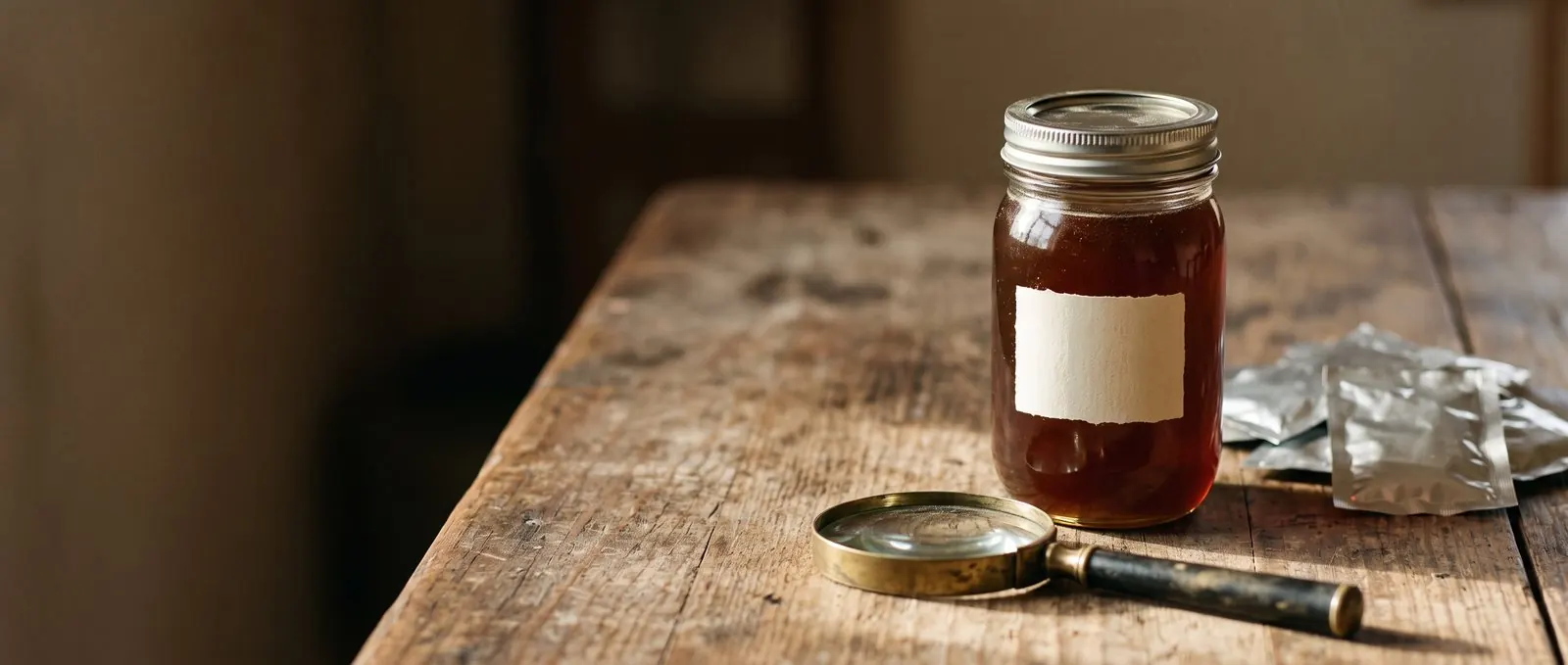
- 'Royal honey' sachets sold for men or women. Usually single-serve packs, often with herbal extracts added. These are the products the FDA warnings are about.
What the FDA found
The FDA keeps a public list of honey-based products found to contain undeclared prescription drugs — chiefly sildenafil and tadalafil, the active ingredients in Viagra and Cialis. As of its April 2026 update the list holds 24 such products, several sold under 'Royal Honey' names, and the agency has sent warning letters to companies selling them.
Its concern is practical: the FDA notes those drugs can interact with the nitrates in some heart medicines and lower blood pressure to dangerous levels, and that they are meant to be taken only under a doctor's supervision. Adding a drug to a food, it has also stated, is against federal law.
None of this has anything to do with Yemen's beekeepers, or with Sidr. It matters because the same word now sits on both kinds of product, and someone searching for one can land on the other.
How to read a Yemeni honey label instead
- A named region or valley — Hadramout, Wadi Do'an, Shabwah, Usimate — not just 'Yemen'.
- A harvest season. Sidr blooms for a few weeks a year; a seller who knows the season knows the honey.
- One ingredient: honey.
- A packer's name and address, and a lot or batch number.
- A price that makes sense. Genuine Yemeni Sidr costs many times supermarket honey; a bargain is a question.
Three Yemeni harvests, each label naming the valley and the season →
Common questions
Is 'royal' a grade of Yemeni honey?
No. There is no official royal grade of honey in Yemen or elsewhere. On a label, 'royal' is a brand or marketing word; the region and harvest season are what describe the honey.
Is royal honey the same as royal jelly?
No. Royal jelly is a secretion that worker bees feed to larvae and queens. Some products blend it into honey and call the result 'royal honey'; a genuine blend lists royal jelly as an ingredient.
Are 'royal honey' sachets safe?
We cannot vouch for any of them. The FDA has found undeclared prescription drugs — sildenafil and tadalafil — in many honey-based products sold this way, and warns they can interact dangerously with nitrate medicines. Ask a pharmacist before taking one.
Why does your jar say 'Royal Honey'?
It is part of our brand name. Our honey is raw Yemeni Sidr with nothing added — no royal jelly, no extracts. Each label names the region it was harvested in.